

The Classroom Without Guardians — And the Child Without Shelter
The Classroom Without Guardians — And the Child Without Shelter — has our rush towards inclusivity at all costs harmed our most vulnerable populations?

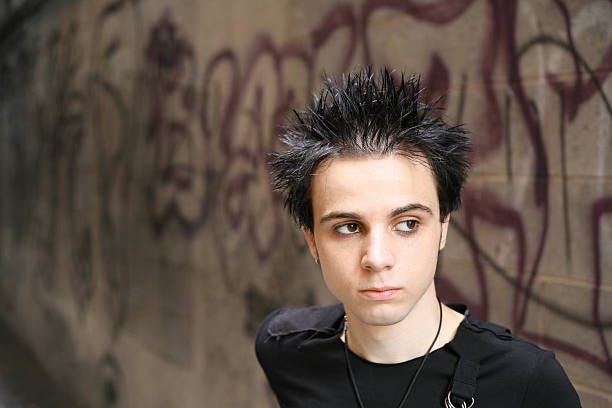
There was a time when the awkward child was not invisible.
He was noticed.
The girl who could not read at grade level.
The boy who flinched at loud noise.
The student who did not understand the rhythm of conversation, who stood half a beat outside the social circle — not malicious, not broken, simply different.
In smaller schools, in structured environments, these children were not thrown into the current and told to swim. They were given scaffolding. Specialized teachers. Deliberate social coaching. Protection where necessary. Correction where required.
Then came the great abstraction.
“Inclusion” became the moral banner of the age. All students, in the same classroom, under the same expectations, moving in the same direction — as if human variance could be erased by policy.
In principle, it sounded compassionate.
In practice, it often transferred responsibility without transferring capacity.
The specialized instructor became a consultant rotating between rooms.
The classroom teacher became part educator, part behavioral technician, part therapist — often without the training or the time.
The vulnerable child became visible in a hierarchy he did not understand.
And here is the truth few wish to examine:
Social outcasts do not remain socially neutral.
Isolation, when unaddressed, hardens.
A child who is persistently mocked internalizes the verdict.
A child who fails publicly, repeatedly, begins to define himself by failure.
A student who cannot decode social cues is punished socially for rules he was never taught.
Left unattended, these conditions do not stay academic. They become psychological.
Low self-esteem is not born from thin air. It is formed through repeated social defeat.
Distorted self-perception is not spontaneous. It grows from years of comparison without guidance.
Socialization problems do not resolve themselves in crowded hallways; they calcify.
This is true for many learning-disabled students. It is equally true for the socially awkward, the neurologically different, the temperamentally fragile.
Some adapt. Some thrive.
But many do not.
The honest question — the one worthy of serious study — is this:
In the race toward full inclusion, did we measure the cost to the most vulnerable?
Did we mistake proximity for integration?
Did we assume exposure would produce resilience?
Did we remove protective structures before ensuring replacement safeguards were strong enough?
We do not yet have comprehensive longitudinal data answering this directly. And we should. We need rigorous study examining:
Outcomes for socially isolated students pre- and post-inclusion expansion.
Long-term mental health trajectories of learning-disabled students in large inclusive systems.
The relationship between inadequate behavioral support and chronic bullying.
Whether large-scale implementation diluted the very protections it aimed to extend.
Because inclusion without structure is not mercy — it is exposure.
And then came the accelerant.
The internet.
A playground argument once ended at 3:00 PM.
Now it follows a child home.
Into his bedroom.
Onto his phone.
Into his sleep.
Cyberbullying does not require physical strength. It requires only connectivity. And the socially awkward — already struggling in physical space — now navigate a second, harsher arena without adult oversight.
A cruel whisper once spoken to five classmates can now be broadcast to five hundred.
Humiliation is archived.
Ridicule is searchable.
Reputation is algorithmic.
For the socially confident child, this may be navigable terrain.
For the learning-disabled student already wrestling with self-concept, or the social outcast unsure of his place, the digital world magnifies insecurity into identity.
Isolation becomes performance.
Self-doubt becomes narrative.
Anger becomes internal monologue.
And when systems fail to intervene early — when specialized attention is reduced, when teacher ratios widen, when social coaching is treated as optional — vulnerability compounds.
This does not mean inclusion is inherently destructive.
It means implementation matters.
Scale matters.
Training matters.
Oversight matters.
Some students flourish in inclusive settings. We know this. But to acknowledge that truth while ignoring those who have not flourished is not compassion — it is selective observation.
The question is not whether inclusion is virtuous in theory.
The question is whether, in expanding it rapidly across large and often impersonal systems, educators unintentionally harmed some of the very students they sought to elevate.
If we care about the vulnerable — truly care — we must be willing to measure outcomes honestly.
Not with slogans.
With data.
With longitudinal study.
With the humility to ask whether policy raced ahead of human reality.
Children differ.
Temperaments differ.
Neurology differs.
And when difference is treated as an inconvenience to philosophy rather than a fact to be structured around, the weakest pay first.
The civilized response is neither segregation nor sentimental abstraction.
It is precision.
Early intervention.
Smaller environments where needed.
Trained specialists embedded, not peripheral.
Clear authority.
Digital oversight equal to digital exposure.
Compassion without competence abandons the fragile.
Structure without humanity suffocates them.
The task of education is not to prove a theory correct.
It is to form resilient human beings — especially those who struggle to form themselves.
Appendix
Rose, C. A., Monda-Amaya, L. E., & Espelage, D. L. (2011).
Bullying Perpetration and Victimization in Special Education: A Review of the Literature. Remedial and Special Education.
Key Findings:
Victimization is linked to anxiety, depression, social withdrawal, and academic disengagement.
Carter, E. W., et al. (2014).
Peer Relationships and Social Inclusion of Adolescents with Disabilities. Exceptional Children.
Key Findings:
Students with disabilities placed in general education classrooms often experience “physical inclusion without social inclusion.”
Many have fewer reciprocal friendships.
Social isolation correlates with poorer self-concept and lower school belonging.
McLaughlin, C., Byers, R., & Oliver, C. (2012).
Perspectives on Bullying and Difference: Students with Disabilities in Inclusive Schools. British Journal of Special Education.
Key Findings:
Inclusion environments vary dramatically in implementation quality.
Schools with structured social skills programs and strong adult monitoring report lower bullying.
Poorly supported inclusion increases peer vulnerability.
Campbell Collaboration Systematic Review (2018).
Key Findings:
Academic outcomes: generally neutral to modestly positive.
Psycho-social outcomes: mixed results.
Strong heterogeneity based on school size, teacher training, and support intensity.
Hawker, D. S., & Boulton, M. J. (2000).
Twenty Years’ Research on Peer Victimization and Psychosocial Maladjustment. Journal of Child Psychology and Psychiatry.
Key Findings:
Strong correlation between chronic bullying and:
Depression
Anxiety
Low self-esteem
Social avoidance
Longitudinal effects can persist into adulthood.
Kowalski, R. M., et al. (2014).
Cyberbullying: A Review of the Literature. Psychological Bulletin.
Key Findings:
Cyberbullying extends the duration and reach of victimization.
Victims experience increased depressive symptoms and suicidal ideation.
Socially isolated youth are disproportionately affected.
National Center for Education Statistics (NCES) School Crime Reports (1990–2022)
Key Findings:
As a parent who quit my full time job to be with my kids, much of this is on the parents and then the liberal teaches and administrators we have now. I was at their schools every day through elementary school and helped in class especially in the younger years! They wanted parents to come in and participate. Further, I always kept the line of communication with my children. I never took anything for granted! This inclusivity you speak to wasn’t a positive step, but a very negative step. Parents also have a responsibility to monitor and RESTRICT cell phone and internet use! So many parents let social media become the babysitter. I was involved every step of the way. So many parents abandon their children once they are of school age to the schools and whatever happens, happens! I was fortunate to be able to help and support many of these kids and they never forgot that I was there for them. Teachers then didn’t do what so many are doing now to incite political issues, they have become the bullies and encouraged the bullies in school and beyond. Public schools especially have become dangerous and the fact these liberal teachers, counselors, etc., are allowed to behave this way and not get fired is horrible. They shouldn’t be anywhere near children. The same thing needs to apply to sports! I have to say our public schools when my children were in school, looked out for ALL of the kids and those who had disabilities were included. The other kids were taught that it was up to us to help and make them feel welcome! This was part of classroom time as well! No child was belittled. Now teachers and adminstrators are allowing bullying and ignoring it! They don’t care what it does to the children. But parents also aren’t carrying their responsibility. Then the DEI, transgenderism, hiding everything from the parents and punishing the parents if they want to protect their child from these predators is the norm now! I thank God they are grown and never had to experience this assault on common decency and children’s well being. So many schools are not safe for children whatsoever. Teachers and administrators were NEVER allowed to take kids out of class for protests or anything like this and put them in harms way, plus allowing them to act out and destroy property and damage and loot businesses with no ramifications!! What is happening is just pure evil.